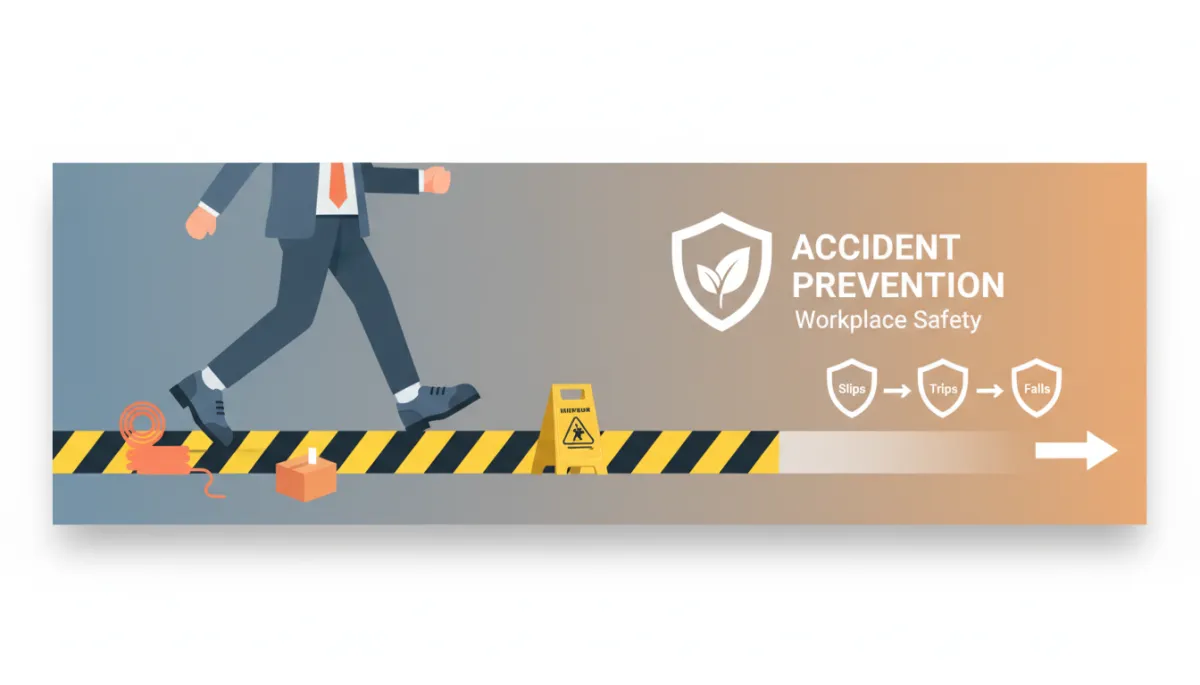
Prevent Slips, Trips, and Falls at Work
Workplace Safety, Accident Prevention, Safety Tips
Safety Fact: Preventing Slips, Trips, and Falls at Work
Slips, trips, and falls might sound minor compared with dramatic industrial accidents, but they are among the most common and costly workplace safety incidents. The good news is that with practical planning and everyday awareness, most of them are completely preventable.
Why Slips, Trips, and Falls Deserve Serious Attention
Many organizations focus on heavy machinery, chemicals, or fire hazards when they think about accident prevention. Yet everyday slips, trips, and falls send thousands of people to emergency rooms each year. They cause sprains, fractures, back injuries, and head trauma, and they can sideline experienced employees for weeks or months.
Beyond the human impact, these incidents affect productivity, morale, and costs. Time away from work, replacement staffing, and insurance claims all add up. Treating falls only as bad luck is a missed opportunity. Viewing them as predictable and preventable risks is the first step toward a stronger workplace safety culture.
Understanding the Difference: Slips vs. Trips vs. Falls
Clear definitions help you spot hazards before they hurt someone:
Slips happen when there is too little friction between footwear and the walking surface – for example, on wet tiles, spilled coffee, or polished floors without proper mats.
Trips occur when a person’s foot hits an obstacle or uneven surface, causing them to lose balance – think loose cables, open drawers, uneven carpets, or cluttered walkways.
Falls are the result of a slip or trip, either on the same level or from a height such as a step, ladder, or platform.
When you break the problem into these categories, falls prevention becomes more manageable. You can look for specific hazards, fix them quickly, and share targeted safety tips with your team.
Practical Workplace Safety Tips to Prevent Slips
Slippery surfaces are one of the easiest hazards to spot – and to ignore. Building simple habits into your daily routine dramatically improves workplace safety:
Clean up spills immediately, no matter how small. A few drops of water or oil can be enough to cause a serious slip.
Use “wet floor” signs and barriers while cleaning and leave them in place until the area is completely dry.
Place entrance mats at doors to absorb rain or snow and keep them flat, clean, and secure.
Encourage appropriate footwear with non‑slip soles in areas where floors may become wet or greasy.
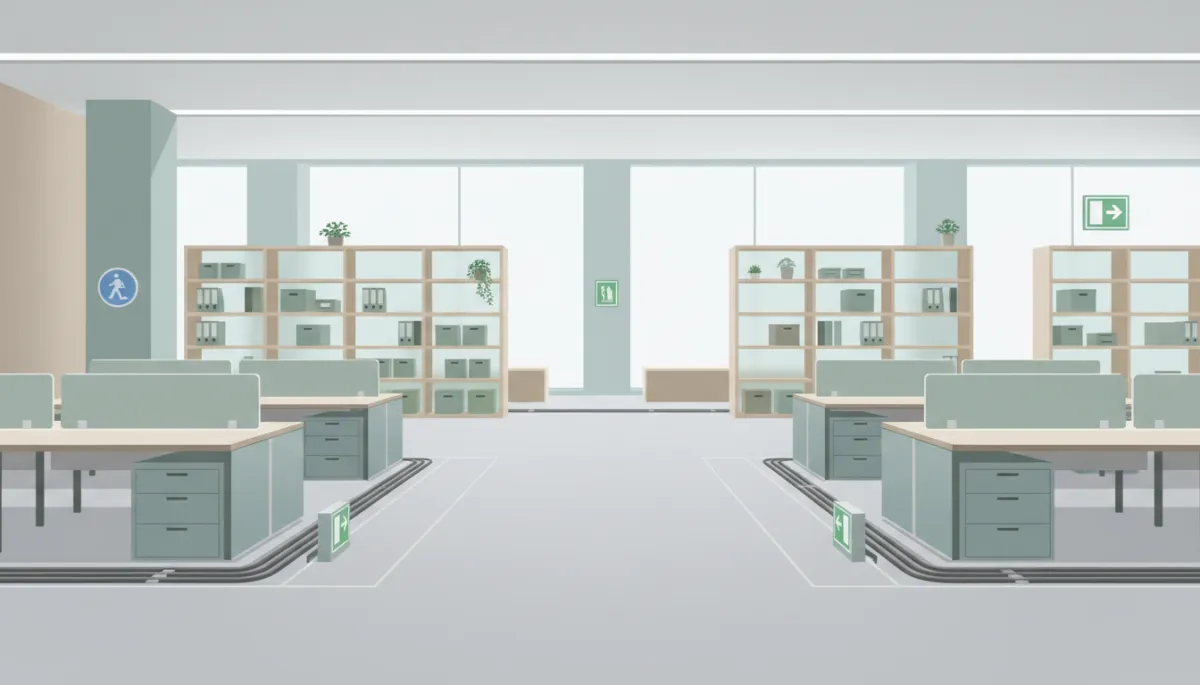
Tidy walkways and clear signage are simple, low-cost steps in accident prevention.
Cutting Down Trips Through Good Housekeeping
Many trips are caused by clutter and poor organization, which makes accident prevention as much about discipline as equipment. A few focused changes can make a big difference:
Keep walkways, corridors, and staircases free from boxes, bags, and equipment, even “just for a minute.”
Secure cables and cords with covers or cable management systems instead of running them across floors.
Repair loose tiles, torn carpets, and uneven thresholds promptly rather than working around them.
Close drawers and cabinets immediately after use so they do not become hidden obstacles.
💡 Pro Tip: Add a quick “walkway check” to the end of each shift. Two minutes of tidying can remove multiple trip hazards.
Falls Prevention: Working on Stairs, Steps, and Heights
When slips or trips happen near stairs, platforms, or ladders, the results can be severe. Effective falls prevention combines safe equipment, good design, and consistent behavior:
Ensure stairways are well lit, with sturdy handrails and clearly marked edges on each step.
Use the right ladder for the job, place it on a stable surface, and never stand on the top rung or overreach.
Install guardrails or barriers around raised platforms and loading docks to prevent accidental step‑offs.
Encourage staff to use handrails, avoid rushing on stairs, and keep one hand free whenever possible.
Building a Culture of Everyday Accident Prevention
The most effective safety tips only work when people feel responsible for one another. A strong workplace safety culture encourages everyone to speak up about hazards, even if they seem small, and to fix what they can on the spot. Supervisors can reinforce this by recognizing safe behavior, not just reacting when something goes wrong.
Regular walk‑throughs, toolbox talks, and short refresher sessions keep slips, trips, and falls prevention on everyone’s radar. Asking simple questions – “Is this walkway clear?” “Could someone slip here?” – turns accident prevention into a daily habit rather than an annual training topic.
A Safer Workplace Starts with Small, Consistent Actions
Preventing slips, trips, and falls does not require complex technology or huge budgets. It relies on clear expectations, practical safety tips, and everyday choices: cleaning up a spill, moving a box, securing a cable, or taking an extra second on the stairs. When organizations treat these simple actions as essential parts of workplace safety, they protect their people, reduce injuries, and create a place where everyone can focus on doing their best work – on their feet, not on the floor.

