Responding to Workplace Medical Emergencies
Workplace Safety, Medical Emergencies, Employee Health
Recognizing and Responding to Medical Emergencies in the Workplace
When a colleague collapses, chokes, or shows signs of a serious health problem, every second counts. Organizations that plan ahead, train staff, and practice effective emergency response dramatically improve outcomes and strengthen overall workplace safety and employee health.
Why Medical Emergencies Belong in Your Safety Strategy
Many organizations invest heavily in fire drills, cybersecurity, and physical security, yet underestimate the likelihood of medical emergencies at work. Cardiac arrest, strokes, severe allergic reactions, diabetic crises, and choking incidents can occur in any setting, from corporate offices to warehouses and retail spaces. These events are often sudden, unexpected, and life-threatening, but a prepared workplace can make the difference between recovery and tragedy.
Integrating medical emergency planning into your overall workplace safety program is a critical element of risk management. It supports employee health, reduces liability, and reinforces a culture where people feel protected and valued. Regulators, insurers, and employees increasingly expect organizations to demonstrate robust emergency response capabilities, including access to first aid supplies, automated external defibrillators (AEDs), and trained personnel.
Recognizing Symptoms: The First Step in Saving a Life
Effective response starts with recognizing symptoms. Many serious medical emergencies begin with subtle changes that colleagues may notice before the person in distress does. Teaching staff what to look for empowers them to act quickly and confidently while professional help is on the way.
Common Medical Emergencies and Warning Signs
Cardiac arrest and heart attack: Sudden collapse, no normal breathing, unresponsiveness, chest pain or pressure, pain spreading to arm, neck, jaw, or back, cold sweat, nausea, or shortness of breath. Cardiac arrest requires immediate CPR and AED use, while a heart attack is a medical emergency that can lead to cardiac arrest if not treated quickly.
Stroke: Sudden facial drooping, arm weakness, or speech difficulty. The FAST acronym (Face, Arms, Speech, Time) is a simple recognizing symptoms tool: ask the person to smile, raise both arms, and repeat a simple phrase. If anything looks or sounds abnormal, call emergency services immediately.
Severe allergic reaction (anaphylaxis): Swelling of face or throat, difficulty breathing, hives, wheezing, or a feeling of impending doom, often after exposure to food, medication, or insect stings. This is life-threatening and may require an epinephrine auto injector while awaiting emergency care.
Diabetic emergencies: Confusion, sweating, shaking, extreme fatigue, or loss of consciousness. Colleagues may notice unusual behavior or difficulty concentrating. If the person is conscious and able to swallow, a fast-acting sugar source may help, but emergency medical evaluation is still recommended for severe or unclear situations.
Choking: Inability to speak or cough, clutching the throat, high-pitched or no breathing sounds, or turning blue around lips and face. Quick intervention with abdominal thrusts (Heimlich maneuver) can dislodge the obstruction and restore airflow.
💡 Pro Tip: Include simple “recognizing symptoms” reference charts in high-traffic areas so employees can quickly review stroke, heart attack, and anaphylaxis signs during a crisis.
Building a Workplace Safety Framework for Medical Emergencies
A strong workplace safety framework connects physical resources, trained people, and clear procedures into a coordinated emergency response system. Leaders should start by assessing risks: the nature of the work, the physical layout, employee demographics, and access to medical services all influence what you need on site.
Equipment and supplies: Stocked first aid kits, AEDs in visible, accessible locations, and clearly marked emergency phones or panic buttons. Regular inspections ensure items are in date and in working order.
Policies and procedures: Written protocols for calling emergency services, guiding responders to the scene, notifying internal stakeholders, and supporting the affected employee and their team after the event.
Roles and responsibilities: Designated first aiders and emergency coordinators on every shift and in every location, with coverage plans for absences and remote work scenarios.
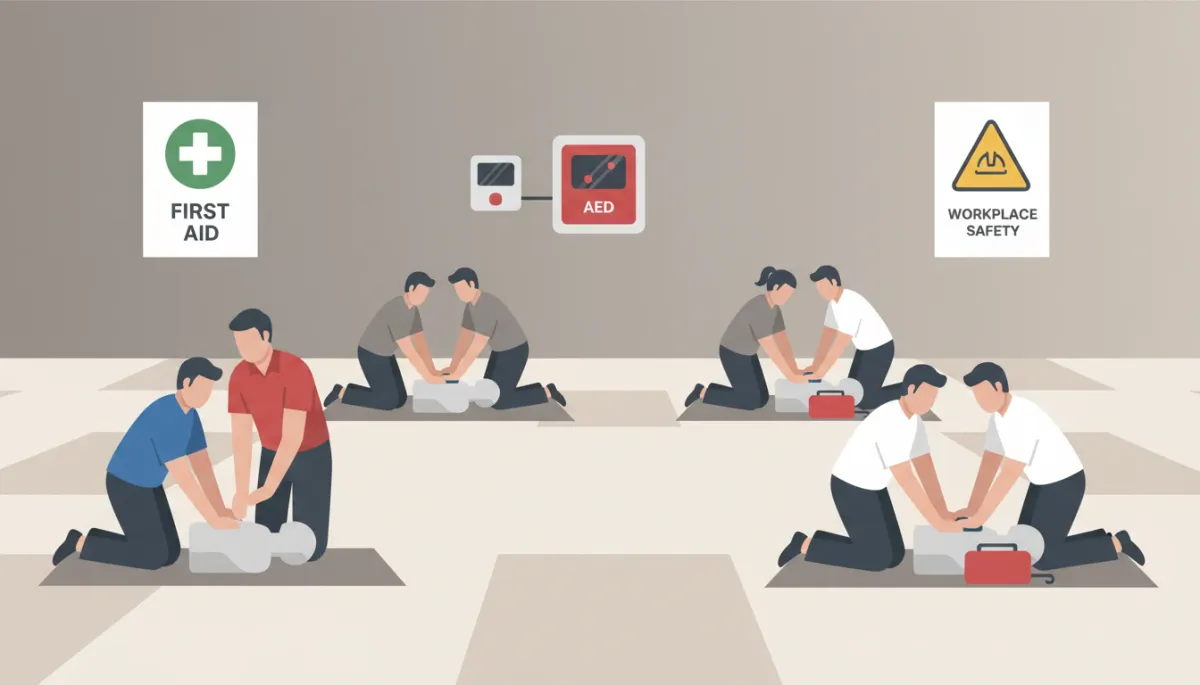
Regular first aid training turns bystanders into confident first responders in critical minutes.
First Aid Training: Turning Policy into Action
Policies alone do not save lives; people do. Comprehensive first aid training equips employees with practical skills and the confidence to act. At a minimum, organizations should ensure that a sufficient number of staff are trained in CPR, AED use, and basic first aid, aligned with local regulations and industry standards. Leading organizations go further, offering awareness sessions for all employees and advanced courses for key personnel.
Effective training covers both technical skills and decision-making under pressure. Participants practice assessing scenes for safety, recognizing symptoms, prioritizing actions, and communicating clearly with emergency dispatchers. Scenario-based exercises tailored to your environment—such as a collapse in a warehouse aisle or a reaction in the staff cafeteria—help bridge the gap between classroom learning and real events.
📌 Key Takeaway: First aid training is not a one-time checkbox. Treat it as an ongoing investment in your people and your risk management strategy.
Designing a Clear, Step-by-Step Emergency Response Plan
In an emergency, confusion wastes precious time. A concise, well-communicated emergency response plan ensures that employees know exactly what to do and in what order. While details will vary, most plans follow a similar structure:
Ensure scene safety: Before approaching, check for hazards such as machinery, traffic, or spills.
Check responsiveness and breathing: Gently tap and speak to the person. If there is no response and no normal breathing, begin CPR and send someone to get the AED and call emergency services.
Call for help: Dial local emergency numbers promptly, providing clear information: location, nature of the incident, number of people affected, and any known medical conditions. Assign a specific person to meet responders at the entrance and guide them in.
Provide first aid within your training level: Use your first aid training to deliver CPR, control bleeding, assist with an epinephrine auto injector, or support a colleague in a diabetic or seizure episode, always staying within your scope of competence and local regulations.
Document and debrief: After the incident, record what happened, review the response, and identify improvements. Offer support to affected employees and witnesses, acknowledging that medical emergencies can be emotionally challenging as well as physically dangerous.
Linking Medical Emergencies to a Broader Employee Health Strategy
Planning for medical emergencies is one part of a comprehensive employee health strategy. Organizations that prioritize wellness—through health screenings, ergonomic assessments, mental health support, and chronic disease management programs—can reduce the likelihood and severity of emergencies. Initiatives that help employees manage blood pressure, diabetes, or allergies may prevent crises or ensure that colleagues are better prepared if they occur.
Encourage employees to share relevant medical information, such as severe allergies or cardiac histories, with occupational health or HR teams, while respecting privacy and confidentiality. Visible tools—like medical alert bracelets, personal epinephrine auto injectors, or clearly labeled medication—can support faster, more accurate emergency response when seconds matter. Integrating these considerations into onboarding, health campaigns, and safety communications reinforces that workplace safety is holistic, covering both physical hazards and health risks.
Turning Awareness into Preparedness
No organization can eliminate all risk, but every organization can be better prepared. By focusing on recognizing symptoms, investing in first aid training, and embedding robust emergency response procedures into your workplace safety program, you send a powerful message: employee lives and health are a top priority.
The next time a medical crisis unfolds in your workplace, will your people know what to do? Now is the time to review your policies, update your equipment, schedule training, and communicate expectations clearly. When medical emergencies strike, preparedness is your most valuable asset—and it starts long before anyone dials for help.

